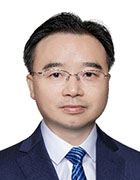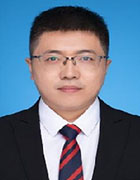
Harbin University of Science and Technology, China

Prof. Ye Dai is a peer review expert for the National Natural Science Foundation of China and an evaluation expert for doctoral/master’s theses under the Ministry of Education. He serves as a council member of the Simulation Technology Industry Branch of the China Industrial Cooperation Association and a council member of the Heilongjiang Provincial Mechanical Engineering Society. He has been recognized as a recipient of the Provincial Youth Innovation Talent Program, the “Science and Technology Talent” Scientific Fund, and the University Youth May Fourth Medal.
His research primarily focuses on the design of high-end intelligent equipment, high-speed electric spindle technology, and space cell robotics. He has led two National Natural Science Foundation projects, two Provincial Natural Science Foundation projects, and three postdoctoral fund projects at both national and provincial levels. Additionally, he has participated in over 20 research projects, including the National 863 Program, key international cooperation projects under the Ministry of Science and Technology, and industry-sponsored projects. He has published more than 50 SCI/EI-indexed academic papers, holds 39 authorized invention patents, and has authored three monographs and textbooks. Professor Dai has been awarded a provincial-level special prize for teaching achievements and has supervised over 20 doctoral and master’s students.
Zhaohui Deng, Doctor of Engineering, Distinguished Professor and Doctoral Supervisor at Huaqiao University.He previously served as Deputy Director of the National Engineering Research Center for High Efficiency Grinding at Hunan University, Vice Dean of the School of Mechanical and Electrical Engineering, Director of the Hunan Provincial Key Laboratory of High Efficiency and Precision Machining of Difficult-to-Cut Materials, Dean of the Institute of Intelligent Manufacturing, and Dean of the School of Mechanical and Electrical Engineering at Hunan University of Science and Technology. In 2023, he was awarded the “Outstanding Author” honor on the 70th anniversary of the founding of Journal of Mechanical Engineering. He was also selected into the “100-Talent Program” for High-Level Innovative and Entrepreneurial Talents Introduced to Fujian Province in 2023.He currently holds the position of Standing Committee Member of the Production Engineering Branch of the Chinese Mechanical Engineering Society, and Committee Member in fields such as Abrasive Technology, Finishing, Machine Tools, and Precision Engineering & Micro/Nano Technology of the Chinese Mechanical Production Engineering Society.

Huaqiao University, China

Southwest Jiaotong University, China
Linmao Qian is Professor of Mechanical Engineering and Dean of School of Mechanical Engineering at Southwest Jiaotong University. He received his BS (1994) and PhD (1999) in mechanical engineering from Tsinghua University in China. After two years at Ecole Normale Supérieure in Paris and one year at the Hong Kong University of Science and Technology as a postdoctoral researcher, he joined the faculty at Southwest Jiaotong University. Now he is Yangtze River Scholars Distinguished Professor. His research interest includes nanotribology and atomic-level manufacturing. He has published more than 300 peer reviewed journals papers and authorized 56 patents. He is Chief Editor of Jurnal Tribologi and Associate Editor of Chinese Journal of Mechanical Engineering.
Prof. Hao Zhaopeng, Ph.D. in Engineering, doctoral supervisor, and Dean of the School of Mechanical and Electrical Engineering.He is a recipient of the Jilin Provincial Outstanding Youth Fund, and has been honored as a Jilin Provincial Excellent Innovation and Entrepreneurship Talent and a winner of the Jilin Provincial Youth Science and Technology Award.
Additionally, he holds titles including Jilin Provincial Professional and Technical Talent with Outstanding Contributions, Jilin Provincial Top-notch Innovative Talent, and Vice Chairman of the Jilin Provincial Mechanical Engineering Society.At Changchun University of Technology, he is recognized as an Excellent Young Scholar and leads a research team. He is also a Fellow of the International Association of Advanced Materials (IAAM).
Prof. Hao serves as a Young Editorial Board Member of Materials Reports, a National Council Member of the Cutting Advanced Technology Research Branch under the China Machine Tool & Tool Builders’ Association (CMTBA) Metal Cutting Tool Technology Association, and a Council Member of the Cutting and Advanced Technology Research Association (Northeast China). Furthermore, he acts as a reviewer for over 10 prestigious domestic and international journals, such as Journal of Manufacturing Processes, Journal of Advanced Manufacturing and Technology, Journal of Alloys and Compounds, and Aeronautical Manufacturing Technology.

Changchun University of Technology, China
(IAAM fellow)

Chongqing University , China
Ma Chi holds a PhD in Mechanical Engineering from Xi’an Jiaotong University and is an Associate Professor and Doctoral Supervisor at Chongqing University. He is a permanent researcher at the State Key Laboratory of Mechanical Transmission, a member of the Reliability Committee of the Chinese Mechanical Engineering Society, and a member of the Digital Twin Professional Committee of the China Society for Image and Graphics. His research focuses on the theory and technology of high-efficiency precision machining and intelligent manufacturing. In the past three years, he has led projects funded by the National Natural Science Foundation of China and the National Key Research and Development Program. He has achieved significant results in the theory and technology of high-efficiency precision machining, intelligent manufacturing, fundamental theories of heat transfer at the micro- and nanoscale, and industrial software. In the past five years, he has published over 50 high-level academic papers in related fields, received 5 provincial and ministerial-level awards and industry association awards, and obtained over 40 invention patents.
Copyright@IMRA2025